
4 min read
An ad creates an expectation. The landing page needs to fulfil it. If the ad promises a cost estimate, visitors should immediately see what will be estimated and how to request an answer. If it features a particular product, the link should lead to that product or a matching offer. Sending everyone to a general home page leaves people searching again for what prompted the click. [1]
Clarity before persuasion
The opening should answer four questions: What is offered? For whom? Under which important conditions? What happens next? The headline need not repeat the ad word for word, but the message must remain consistent. A brief explanation, genuine benefits and a visible action help people decide. Do not hide constraints such as a minimum order or delivery area at the bottom.
Imagine an ad for same-day flower delivery. The page should quickly state eligible cities, the order deadline and any extra charges. If the shopper only learns the terms in the cart, changing the button colour will not solve the issue. The copy must reflect the actual service.
Arrange content around the decision
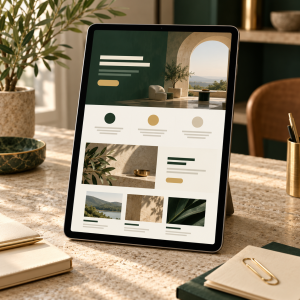
A practical sequence might be:
- a headline and explanation linked to the ad
- key benefits supported by concrete facts
- terms, process and answers to common concerns
- a clear action with a simple form or product choice
- company details and contact information for questions.
No one layout suits every offer. A complex business service needs more explanation than a simple event registration. Images and examples should clarify the offer rather than merely fill space. Use descriptive subheadings and bullets when visitors compare several criteria.
Remove needless obstacles
An initial conversation form need not demand a detailed project budget. Ask for what is needed to give a useful response and say what happens after submission. On mobile, check field sizes, button visibility and readability. The page should load promptly, and essential information should remain available even when images or video are slow. Test the confirmation message: clicking “Send” is not the same as successfully delivering a lead.
For a purchase, verify variants, price and the path to the correct cart. For calls, check that the number is tappable and hours are accurate. A landing page is not an isolated poster. The entire route must work.
Measure outcome quality
Ad and button clicks provide signals, but the later outcome matters. Count relevant submitted enquiries, confirmed purchases or actual bookings. When comparing two page versions, change one important element and record the test conditions. Do not declare a winner after a handful of visits. Read visitor questions alongside the data. Clarify any terms they find confusing. [2]
A good landing page is not necessarily long or short by a universal rule. It quickly confirms that visitors are in the right place, gives enough information for their decision and makes the next step straightforward.
Check before you spend
Before turning on ads, open the actual destination URL on a phone. Does its language match the ad? Are terms accurate and links working? Submit a test form and confirm both delivery and measurement of a successful action, rather than a mere click. One broken integration can make a whole campaign look ineffective.
After launch, review the quality of conversations. If people ask for something you do not offer, the headline or conditions may be unclear. If leads are suitable but few complete the form, inspect its length and technical barriers. In multilingual campaigns, test the confirmation page and email in the matching language. The journey from ad to response should remain consistent.
Frequently asked questions
What should the opening of a landing page explain?
The opening should answer four questions: What is offered? For whom? Under which important conditions? What happens next? The headline need not repeat the ad word for word, but the message must remain consistent. A brief explanation, genuine benefits and a visible action help people decide. Do not hide constraints such as a minimum order or delivery area at the bottom.
How can I arrange landing-page content?
A practical sequence might be:
- a headline and explanation linked to the ad
- key benefits supported by concrete facts
- terms, process and answers to common concerns
- a clear action with a simple form or product choice
- company details and contact information for questions.
Sources
Sources last checked: 12 October 2026.
Related articles
Browse more articles



Services related to this topic
Choose a service to suit your business needs. The standard scope from our price list applies.